
If you want to have a website built in Vienna, pay less attention to colors and more to impact. A good website delivers five things: it says immediately who it is for, it leads to exactly one action, it loads fast, it gets found on Google and it proves trust. Expect 4,000 to over 25,000 euros depending on scope and a duration from four weeks to several months. What matters is an agency that asks about your goal first, not your favorite design.
The most common mistake: beautiful instead of effective
A beautiful website impresses. A good website sells. That is not the same thing. We regularly see expensive sites that look flawless and still bring in not a single inquiry. The reason is almost always the same: the site was conceived as a business card, not as a sales channel.
Before anyone talks about colors and animations, one question counts: what should a visitor understand and then do in the first ten seconds? Anything that does not support that answer is, when in doubt, decoration. That does not mean design does not matter. Good design directs the eye exactly to where the decision is made. Bad design directs it everywhere at once.
The five things a website must deliver
1. Clarity
The homepage must say in one sentence who it is for and which problem it solves. Test it: let someone outside your industry look at it for ten seconds and then explain what you offer. If the answer falters, sales will falter later.
2. Guidance
Every page needs one primary goal: inquiry, call, appointment, download. Five equally weighted buttons are not a choice but paralysis. Everything secondary ranks below it.
3. Speed
A large share of visitors comes on mobile, often on the go with an unstable connection. Every second of loading time costs visitors. Speed is therefore not a technical detail but direct revenue, and a key reason why we rely on fast technology like Next.js. The effect works in two directions: a fast site keeps visitors, and it contributes to findability because loading time is a ranking factor. A slow site therefore loses twice, in bounce rate and in visibility.
4. Findability
The most beautiful site is worthless if it is invisible for your customers' search terms. Structure, clean technology and relevant content decide whether you are even considered. That is why SEO has to be considered from the start, not bolted on afterward. One example of how closely the build and findability are connected: if a website is set up cleanly from a technical standpoint, it can build first visibility on Google just a few weeks after launch. If it is built without an SEO foundation, you later fight errors that could have been avoided during the build. More on this at our SEO agency in Vienna.
5. Trust
References, numbers, real faces and clear ways to get in touch remove doubt in advance. Trust is the currency in which people buy online. Especially with services that need explaining, it is often not the best offer that decides but the most credible one. A hidden legal notice or stock photos instead of real faces send the wrong signal.
A short reality check: beautifully built, but empty
So that the five points do not stay abstract, here is an example from practice, deliberately anonymized, from the construction sector. After the relaunch the site was fine technically and visually, but practically invisible on Google. Six weeks later the numbers stood at 777 impressions, three first-place rankings and 51 sessions. A solid start, but the truly important part was elsewhere: the central search terms that ready-to-buy customers use to look for exactly this service were still unoccupied, practically ownerless. This is exactly where the difference shows between a website as a business card and a website as a sales channel. The build was half the battle. The other half is making the site visible for the right terms. Anyone who thinks about both together from the start saves themselves the expensive second attempt.
How a good website project works
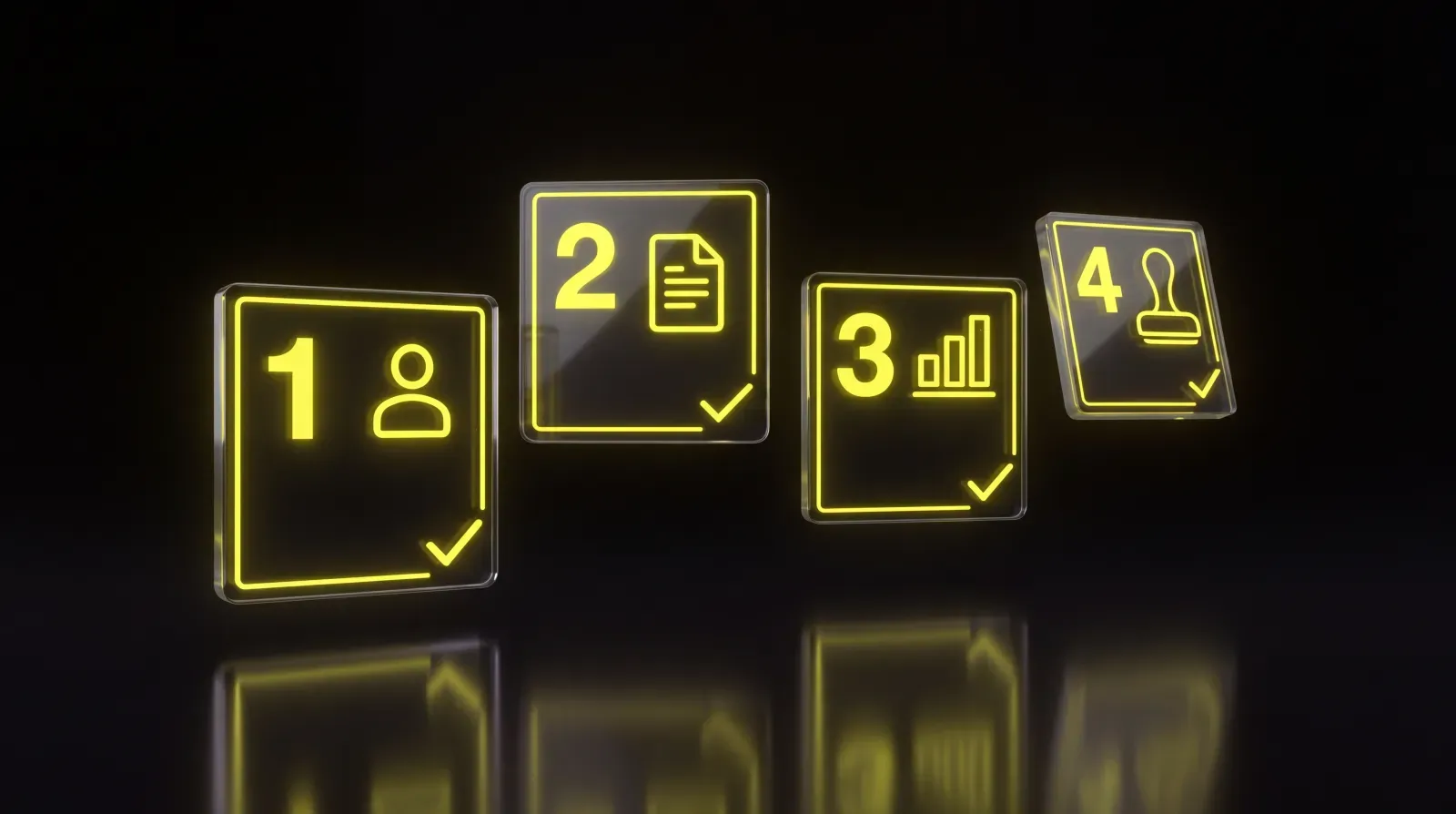
A clean process protects against nasty surprises. With us it has five steps:
- Discovery: We understand the business, the market and the goal. This is where it is decided whether the later site contributes to a real problem or just looks good.
- Strategy: Positioning and a clear plan for how the site wins. This includes which search terms it should occupy and which action it must trigger.
- Design: Brand and user experience become visible, always in the service of the action, not as an end in themselves.
- Build: Website, content and technology are implemented, with clean structure and fast loading time from the start.
- Grow: Measure, refine, develop further. A website is not finished at launch but only then begins to deliver data.
One responsible team across all steps prevents the expensive handovers in which context gets lost between strategy and implementation. Feel free to ask in the selection meeting: who looks after my project from Discovery to Grow, and is that the same person I am talking to today? Where the answer is evasive, friction losses threaten later.
What you contribute as a client
The biggest time factor in any project is content. If you provide goals, target audience and existing texts and images early and name a contact person for quick decisions, you shorten the project considerably. If content is missing, we take over copywriting and photography, which costs more but is usually better for the impact.
A short checklist of what noticeably speeds up a project:
- Goal in one sentence: What exactly should the website achieve (more inquiries, appointments, sales)?
- Target audience: Who exactly is the site for, and which problem do you solve for these people?
- Existing material: Logo, texts, photos, references, all in usable form.
- Access: Domain, hosting, existing analytics accounts.
- One decision maker: One person who bundles feedback and gives approval, instead of five opinions without a conclusion.
If one of these points is missing, it is not a dealbreaker, but each of them saves days to weeks on average.
What it costs and how long it takes
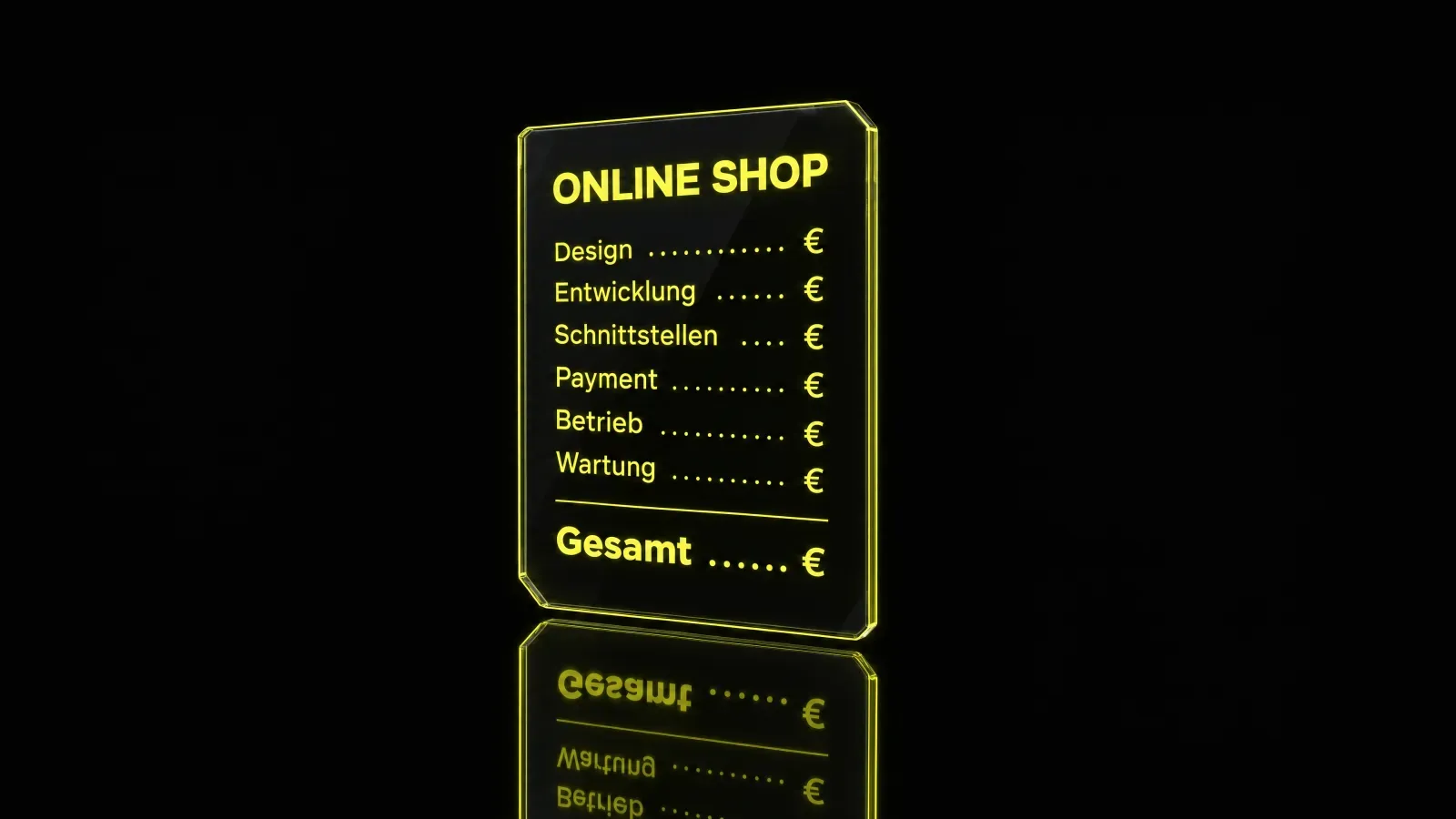
In terms of price, a website in Vienna ranges between 4,000 and over 25,000 euros depending on scope. Larger enterprise projects with many features and interfaces come to 25,000 to over 60,000 euros. Open implementation hours are billed at 80 to 135 euros in Vienna and Linz. You will find the full breakdown in our article on what a website costs. In terms of time, compact SME sites are doable in four to eight weeks, extensive projects take several months.
A note on comparing prices: two offers with the same total can contain completely different services. Check whether content, SEO foundation, loading time optimization and ongoing support are included or cost extra later. The lower price is rarely the cheaper one if half of it gets added afterward.
If you already have a website that no longer delivers, a targeted relaunch is often worthwhile instead of a complete rebuild. And because visibility decides success, it is best to plan SEO right away, more on this at our SEO agency in Vienna.
Do you want to have a website built in Vienna that sells instead of just pleasing? Take a look at our web design in Vienna or request a non-binding initial consultation.